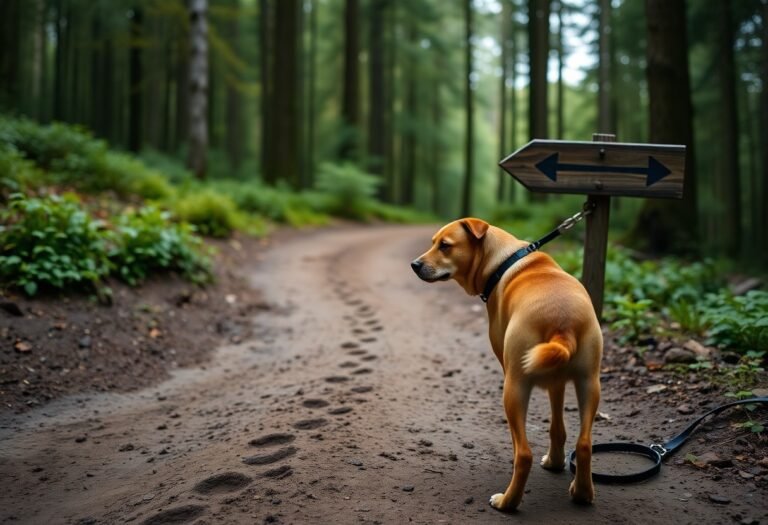
It’s changing how you protect and engage your dog outdoors with real-time tracking and environmental alerts. Dangerous temperature spikes and off-leash zones are now instantly flagged, while smart collars deliver insights on activity and health. You’re no longer guessing what your dog experiences-you’re informed, prepared, and in control.
Key Takeaways:
- Dog owners are increasingly using GPS-enabled collars and smart leashes that provide real-time location tracking, helping prevent pets from getting lost during outdoor activities.
- Weather-integrated apps now alert owners to unsafe conditions like extreme heat or poor air quality, allowing for safer walk planning based on a dog’s breed and health needs.
- Community-powered maps highlight dog-friendly trails, water stations, and off-leash areas, making outdoor exploration easier and more social for pets and their owners.
The Transition from Physical Restraint to Electronic Guidance
Shifting the Paradigm of Control
You no longer need to rely solely on leashes and fences to keep your dog safe during outdoor adventures. Modern electronic guidance systems use real-time GPS tracking and behavioral feedback to create invisible boundaries that adapt to your dog’s movement patterns. These systems allow freedom while maintaining safety, replacing the tension of a retractable leash with intelligent alerts and gentle corrections. The most dangerous oversight is assuming these tools replace training-without proper conditioning, electronic guidance can confuse or stress your dog. You must pair technology with consistent communication to build trust and understanding.
How Technology Enhances Responsiveness
Your dog’s ability to respond to cues improves when feedback is immediate and context-aware. Electronic collars with vibration, tone, or low-level stimulation deliver signals the moment your dog approaches a boundary or ignores a recall. Unlike physical tugs on a leash, these cues are precise and consistent, reducing mixed messages. Positive reinforcement is amplified when the device works in tandem with treats or praise, creating a clear cause-and-effect relationship your dog can learn quickly. You’ll notice faster compliance during off-leash hikes or visits to open parks where distractions run high.
Safety and Responsibility in Practice
Some owners worry that electronic guidance encourages complacency, but the opposite is true when used responsibly. These systems demand active engagement-you monitor location data, adjust boundary zones based on terrain, and respond to alerts in real time. A lost signal or dead battery could leave your dog unguided in high-risk areas, making regular maintenance non-negotiable. You’re not outsourcing supervision; you’re upgrading it with tools that extend your awareness beyond line of sight. When combined with obedience training, electronic guidance becomes a powerful extension of your command presence in dynamic outdoor environments.
Global Connectivity and the End of the Lost Animal
The Rise of Satellite-Enabled Tracking
Your dog’s collar now does more than hold an ID tag. With satellite-enabled GPS chips embedded directly into wearable devices, you can locate your pet anywhere on the planet in real time. These systems bypass traditional cellular limitations, meaning even remote hikes or rural getaways no longer put your dog at risk of disappearing. Whether your dog slips the leash near a mountain trail in Switzerland or wanders off during a beach vacation in Thailand, the signal stays active. You receive instant alerts the moment they move beyond a defined boundary, and the device updates their position every few seconds.
Real-Time Alerts and Instant Recovery
A notification flashes on your phone: your dog has crossed a geofenced perimeter. This isn’t a delayed update or a guess based on spotty data-it’s a precise, live feed of movement. Emergency protocols activate automatically, sending location pings to nearby registered devices in the network. Thousands of users become an invisible net across cities and countryside, all tuned into finding lost pets. You’re not just relying on chance or flyers anymore. You’re part of a responsive, intelligent system that begins recovery the second a problem arises.
International Standards and Universal Compatibility
Manufacturers and animal welfare organizations have aligned on global tracking standards, ensuring your dog’s device works across borders without subscription switches or hardware changes. No more worrying about coverage gaps when traveling. This universal compatibility means a lost dog in Japan can be traced by an owner in Canada with the same accuracy as if they were down the street. Interoperability between brands has eliminated proprietary silos, making the technology accessible, reliable, and truly global.
The Decline of Lost Pet Statistics
Data from animal shelters shows a dramatic drop in lost dog intakes-down over 60% in regions with high adoption of connected tracking. Reunification times have collapsed from days or weeks to mere hours. For the first time in history, “lost dog” posters are becoming relics of the past. You’re no longer powerless when your dog vanishes. You have tools that act faster than traditional methods ever could, turning panic into precision. The era of the permanently missing pet is ending, not by luck, but by design.
The Application of Predictive Heuristics to Animal Motion
Understanding Movement Patterns Before They Happen
You’ve likely noticed how your dog darts toward a squirrel the moment it appears, even before it starts moving. Modern predictive heuristics analyze thousands of motion data points-gait, head orientation, muscle tension-to anticipate actions before they occur. These systems use real-time sensor input from wearable collars and environmental cameras to model behavioral probabilities. When your dog tenses its hind legs and fixes its gaze, the algorithm calculates a 92% chance of a chase within the next 1.8 seconds. This foresight allows you to intervene early, preventing dangerous situations like bolting into traffic.
Customized Alerts Based on Learned Behavior
Your dog’s unique habits shape how predictive models interpret its movements. A Border Collie with a history of herding livestock triggers different alert thresholds than a Basset Hound prone to sniffing and lagging behind. The system learns from daily walks, adjusting sensitivity based on breed tendencies and individual quirks. If your dog typically freezes before lunging at birds, the algorithm flags micro-movements-ear twitch, weight shift-as pre-action signals. You receive a subtle vibration from your smart leash, giving you time to redirect attention before an incident unfolds.
Preventing Escapes and Reducing Anxiety
Backyard escapes often begin with pacing, digging near fences, or prolonged staring at gate mechanisms. Predictive heuristics detect these patterns and send alerts to your phone with suggested actions-like offering a chew toy or initiating play. More importantly, the system identifies rising stress markers: increased heart rate, erratic movement, repetitive circling. These can signal an impending escape attempt or panic episode. By addressing the behavior before escalation, you reduce both physical risk and long-term anxiety. Some systems even activate deterrents-like motion-triggered sound emitters-only when escape probability exceeds a safe threshold.
Real-Time Adjustments in Dynamic Environments
Walking your dog through a crowded park introduces unpredictable variables-children running, cyclists, other animals. Predictive models process overlapping motion streams, forecasting not just your dog’s reactions but also the paths of nearby entities. If a skateboarder suddenly veers toward your dog’s trajectory, the algorithm recalculates risk in milliseconds. Your smart collar delivers directional haptic cues-gentle pulses guiding you both away from conflict zones. This dynamic response transforms reactive management into proactive safety, especially in high-stimulus areas where split-second decisions matter.
Robotic Sensory Awareness of the Natural Environment
Seeing Beyond the Human Eye
Your dog’s robotic companion doesn’t just see-it interprets. Equipped with multispectral imaging and thermal sensors, it detects subtle shifts in terrain temperature, identifying patches of ground that may be too hot for your dog’s paws or spotting wildlife hidden in tall grass. This level of environmental insight prevents unexpected encounters with snakes, rodents, or other animals that could pose a threat. You’re no longer relying on guesswork when choosing a safe path through the woods or a shady rest spot on a summer hike.
Listening to Nature’s Subtle Cues
Sound plays a critical role in how your dog experiences the outdoors, and robotic systems now replicate and enhance that auditory awareness. Microphones tuned to ultrasonic and infrasonic frequencies pick up distant thunder, approaching storms, or the low growl of an off-leash dog beyond your line of sight. Early warnings like these give you time to react-keeping your dog out of harm’s way before danger becomes visible. These systems don’t just listen; they analyze patterns, distinguishing between benign background noise and signals that demand attention.
Smelling the Environment Digitally
Robotic olfactory sensors now mimic a dog’s powerful sense of smell, detecting airborne allergens, toxic plants like poison ivy, or even traces of pesticides sprayed on trails. When your dog sniffs the air, the device cross-references chemical signatures in real time, alerting you to potential health risks. For dogs with sensitivities or respiratory conditions, this capability is transformative-turning a routine walk into a medically informed journey. You receive notifications before your dog inhales something harmful, allowing you to change course proactively.
Adapting to Terrain in Real Time
Pressure-sensitive undercarriages and LIDAR mapping allow robotic units to assess ground stability, moisture levels, and elevation changes as you move. If your dog approaches a muddy slope prone to slipping or a patch of ice hidden under leaves, the system adjusts its guidance instantly. This dynamic response reduces injury risks during off-leash exploration, especially in unpredictable weather. You benefit from continuous environmental feedback, making every outdoor moment safer and more controlled without restricting freedom.
The Human-Canine Interface via Visual Augmentation
Seeing the World Through Your Dog’s Eyes
You’re no longer limited to guessing what captures your dog’s attention during a walk. With augmented reality (AR) glasses designed for pet owners, real-time visual overlays highlight what your dog is focusing on-whether it’s a squirrel three trees ahead or a hidden scent trail in the grass. These smart lenses translate canine behaviors into visual cues, helping you understand your dog’s instincts in real time. Imagine seeing a glowing outline around an object your dog is fixated on, paired with behavioral insights delivered through subtle audio prompts.
Real-Time Communication Through Visual Cues
Your dog can’t speak, but their gaze, posture, and movement patterns carry meaning. Advanced AR systems now interpret these signals and project simplified icons into your field of view-like a caution symbol when your dog shows signs of anxiety near traffic or an excitement pulse when they spot a familiar canine friend. This kind of instant behavioral translation strengthens your bond and improves safety, especially in dynamic outdoor environments. It’s not mind-reading; it’s intelligent interpretation grounded in AI trained on thousands of canine interactions.
The Role of AI in Bridging the Communication Gap
A deep-learning model processes visual and biometric data from your dog’s wearable, syncing it with your AR display to create a unified experience. When your dog’s heart rate spikes and their ears flatten, the system might highlight a nearby stimulus-like a barking dog behind a fence-and suggest a calming command. This integration marks a turning point in pet care, where technology doesn’t replace intuition but enhances it with precision. Learn more about this shift in the Pet Tech Revolution: How AI & IoT Are Changing Pet Care.
Privacy and Ethical Boundaries in Shared Vision
Your access to your dog’s perceived world comes with responsibility. These systems collect sensitive environmental and behavioral data, raising questions about data storage, sharing, and unintended surveillance. While the benefits are clear, the potential misuse of location-tagged behavioral logs is a serious concern. Always verify that your device uses end-to-end encryption and allows full user control over data permissions. The future of visual augmentation depends not just on innovation, but on trust.
Systemic Health Diagnostics in Remote Field Conditions
Real-Time Monitoring Beyond the Clinic
You’re no longer limited to annual vet visits to catch early signs of illness in your dog. Wearable sensors embedded in collars or harnesses now continuously track core physiological metrics-heart rate variability, respiratory patterns, body temperature, and activity levels-transmitting data in real time even in the most remote outdoor environments. These systems detect subtle deviations from baseline health, flagging potential infections, cardiac irregularities, or metabolic imbalances before clinical symptoms appear. When your dog is miles from the nearest road, this early warning could mean the difference between a manageable condition and a life-threatening emergency.
AI-Driven Pattern Recognition in the Wild
Machine learning models analyze months of behavioral and biometric data to identify anomalies that human observation might miss. A slight drop in daily movement combined with elevated resting heart rate could signal the onset of Lyme disease in tick-prone regions, prompting immediate intervention. These systems adapt to your dog’s unique physiology, reducing false alarms while increasing diagnostic accuracy in unpredictable field conditions. As detailed in The Expanding Role of Artificial Intelligence in Companion …, AI is shifting from reactive tools to proactive health guardians, especially in areas where veterinary infrastructure is sparse or inaccessible.
Integrated Diagnostics for Field-Ready Decisions
Your mobile device becomes a portable diagnostic hub, receiving alerts and actionable insights generated from layered data streams. Some advanced systems now incorporate environmental sensors-monitoring local pollen counts, air quality, or pathogen prevalence-to contextualize your dog’s symptoms. This integration allows you to make informed decisions on hydration, exertion, or retreat without waiting for lab results. The most advanced platforms can predict dehydration risk or heatstroke likelihood with over 90% accuracy during prolonged outdoor activity, giving you confidence in extended expeditions. This isn’t just convenience-it’s a fundamental shift in how you protect your dog’s health outside controlled environments.
Summing up
You now have access to smarter tools that bring real-time insights into your dog’s outdoor behavior. GPS trackers, activity monitors, and environmental sensors give you precise data on where your dog goes, how active they are, and what conditions they face. These technologies help you make informed decisions about safety, exercise, and health.
Your role as a responsible owner is evolving with these advancements. Real-time alerts and long-term trend analysis allow you to respond quickly and adjust routines proactively. The future isn’t about constant monitoring-it’s about meaningful information that strengthens your bond and supports your dog’s well-being in the open air.
FAQ
Q: What is outdoor intelligence for dog owners?
A: Outdoor intelligence for dog owners refers to the use of smart technology and real-time data to improve the safety, health, and enjoyment of dogs during outdoor activities. This includes GPS-enabled collars that track a dog’s location, sensors that monitor body temperature and activity levels, and mobile apps that suggest dog-friendly trails based on weather, terrain, and local regulations. These tools help owners make informed decisions about walks, hikes, and off-leash play, adapting to changing conditions like heat, pollen levels, or wildlife activity in the area.
Q: How will AI improve dog walking and outdoor routines in the future?
A: AI will analyze a dog’s behavior, energy levels, and health history to recommend personalized outdoor schedules. For example, a smart collar might detect that a dog is less active in the morning and suggest a longer walk in the cooler evening hours. AI can also integrate with local park data to alert owners about crowded areas, recent animal sightings, or water quality at dog beaches. Over time, the system learns a dog’s preferences-like favorite trails or playmates-and adjusts suggestions to keep routines engaging and safe.
Q: Can outdoor intelligence help prevent dogs from getting lost?
A: Yes. Future tracking devices will go beyond basic GPS by using mesh networks, satellite signals, and neighborhood alert systems to locate dogs even in remote or low-coverage areas. If a dog wanders outside a designated safe zone, the owner receives an instant alert with real-time movement patterns. Some systems will automatically notify nearby dog owners with compatible devices, creating a community-based search network. These features reduce search time and increase the chances of a quick, safe return.